Frequently Asked Questions About Hitch Receivers

Continue below to review some frequently asked questions about towing setups and hitch class receivers.
Indianapolis Towing 317-247-8484

Indianapolis Towing 317-247-8484

What are Hitch Classes?

All hitches can be categorized into 5 classes, fittingly labeled Class 1 through Class 5. See our article, “The 5 Hitch Classes and their Maximum Load Capacities” to learn more about hitch classes, including the load capacities for each.

How Do I Choose the Right Tow Hitch?

Start by referring to your towing vehicle’s owners’ manual, as well as, the same manual for your trailer. The manual for your towing vehicle will provide its maximum tongue weight (TW) and gross trailer weight (GTW). Tongue weight is the total amount of weight that rests directly on top of the hitch. Gross Trailer weight is the total mass of your trailer, including hardware and cargo. Once you have this information, you will have an easier time selecting the proper trailer hitch for your towing needs.

Which Tow Hitch Accessories Do I Need?

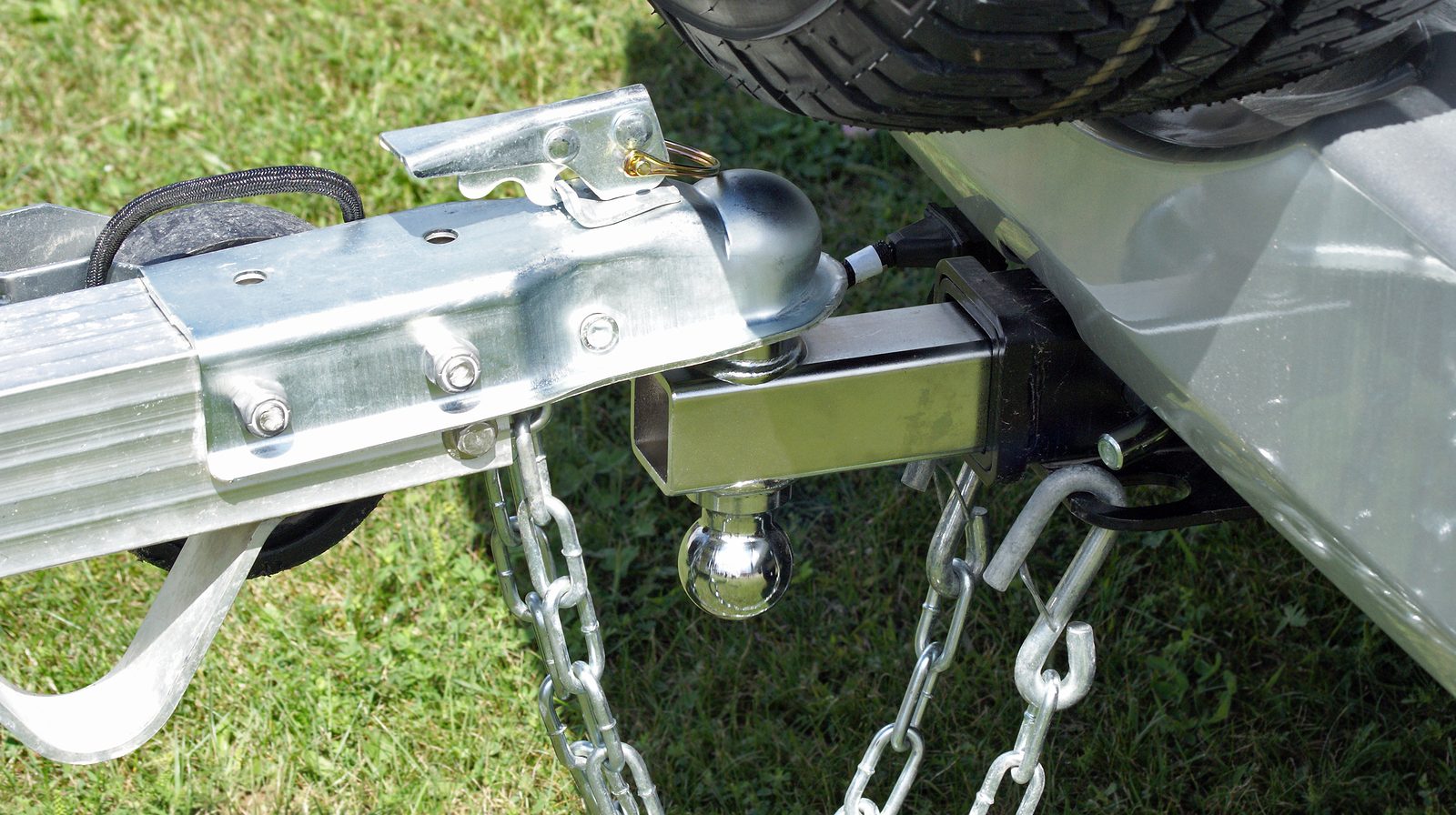
A full towing set up will include the hitch receiver, as well as, the ball mount, hitch ball, coupler, pins, locks, clips, safety chains, tube covers, hitch-mounted cargo carriers, extenders and adapters, weight distribution systems, trailer jacks, wiring harness, and more. Talk to a professional for advice regarding the proper tow setup for your vehicle and cargoes.

What is a Gooseneck Hitch?

Gooseneck hitches are very well-suited for trucks, especially those with 4-wheel rear axles. They are designed for a precise fit for any make or model truck, SUV, or van. The ball mounts in the middle of the truck bed, which allows for heavier weight and tighter turns. Furthermore, this setup allows for easy hitch ball conversion.

What is a Fifth Wheel Hitch?

Fifth Wheel Hitches look just like the hitches you see on semi-trucks, but they are not quite the same. Similar to Gooseneck hitches, they retain a very high tow weight capacity. Because of their bed-mounted design, they can tow between 16,000 and 30,000 pounds Gross Trailer Weight (GTW), and up to 5,000 pounds Tongue Weight (TW). These hitches are great for towing large campers and multiple vehicles since they are easy to install and maneuver well.

Which Type of Hitch Do I Need to Tow a Boat?

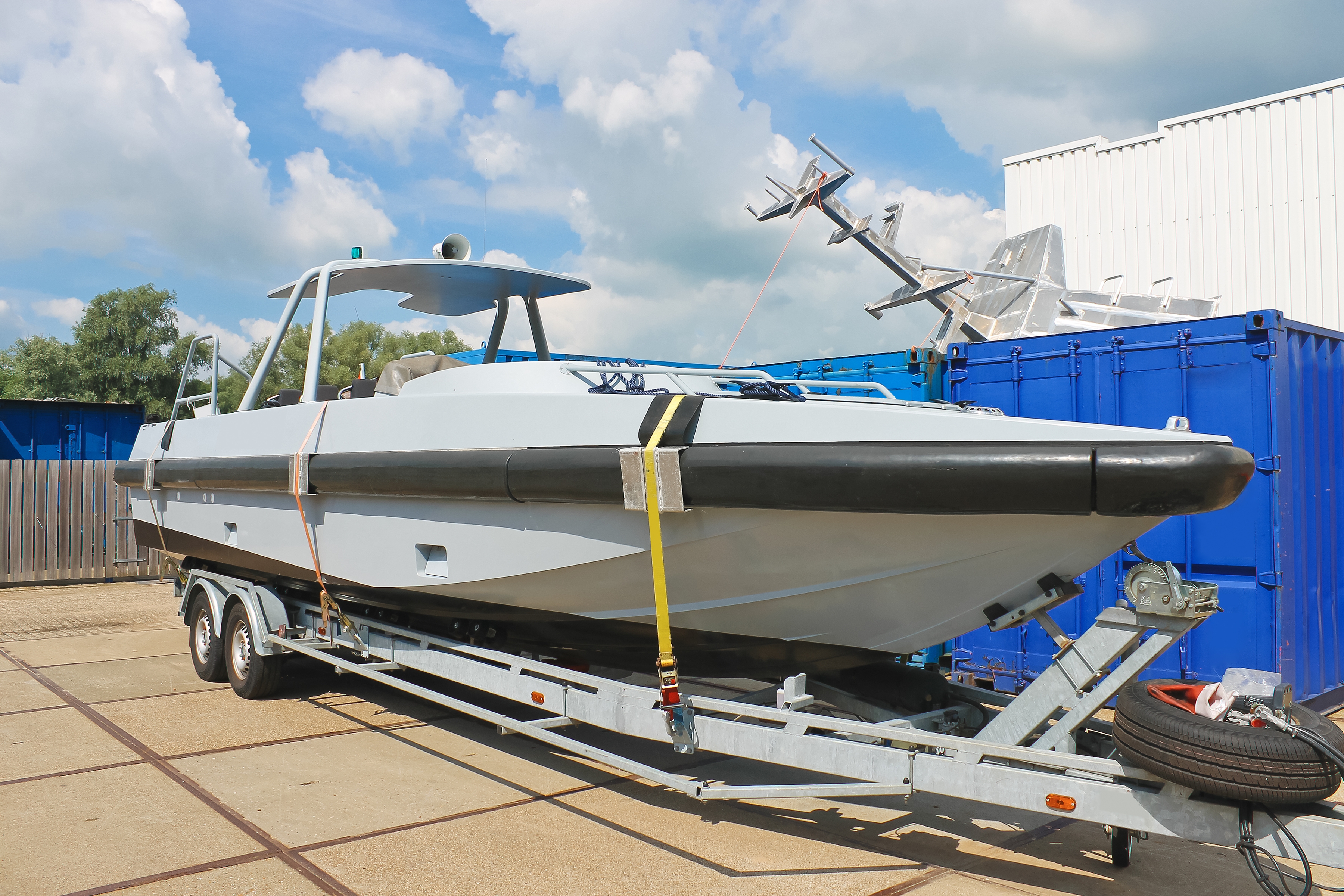
A fishing boat and trailer combined will usually have a gross trailer weight (GTW) under two tons. So to safely (and legally) tow a loaded trailer weighing up to 2,000 pounds, you need 5 primary components. This includes a trailer hitch receiver, a ball mount, a hitch ball, a pin and clip, and a wiring harness.

Do I Need a Hitch Lock?

Hitch locks are meant to stop thieves from stealing trailers and the commodities they carry. They are lock a trailer hitch and hitch receiver together, which makes it impossible to lift the receiver and un-hitch a trailer. The trailer hitch can only be removed when the hitch lock is open. Most trailer locks are a half of an inch and 5/8 of an inch in diameter. The hitch lock you buy will need to fit the Class hitch receiver you are using for your trailer. For instance, Class 1 and 2 hitch receivers use ½-inch pins, while Class 3, 4 and 5 receiver hitches use 5/8 inch pins.

Where Can I Get Help With My Towing Needs?
Indianapolis Auto Body Shop 317-247-8484

Indianapolis Auto Body Shop 317-247-8484
Call Zore’s Inc. at 317-247-8484 for affordable Indianapolis towing and roadside assistance services in you can trust. Our licensed and insured wrecker operators provide punctual and prompt tow truck services throughout all of Central Indiana, 24 hours a day and 7 days a week! We also provide a wide range of municipal services, roadside wrecker and recovery services, and much more. Request a free estimate, anytime.

Important Tips for Being a Safer Tower

Perhaps you have been towing trailers and boats for a long time. But even as a veteran, there are still some ways you can improve your towing skills, and thus, be a safer tower. Continue reading to review some of the basic rules for towing safety, and test yourself to see if you are being as safe as you can on the road.

Indianapolis Towing

Indianapolis Towing 317-247-8484

Use the Proper Set Up

The most important tip for towing is to use the right towing set-up. This means matching the load weight with the right capacity trailer hitch, and using the right type of vehicle for the tow. There is a reason why towing capacity exists. There are several consequences to ignoring a vehicle’s towing limit. This includes safety hazards, mechanical damages, and more. The most dangerous, and common, consequence to exceeding a vehicle’s towing capacity is losing the ability to brake. So be sure your car or truck is capable of towing the weight you need to haul. If you need to tow loads up to three thousand pounds, then be sure to purchase a vehicle that can tow that weight.

Safety Chains are Not Optional

One rule to always get right is to use safety chains, and good quality ones that are in good condition. Follow all the instructions laid out in the manufacturer’s manual for assembly and operation. Safety chains are not an option, they have to be used for any type of tow. They should cross in both directions underneath the trailer tongue. This way, if it detaches from the tongue, the hitch will not drop the load. Safety chains should never be attached to a bumper under any circumstances. There should also be enough slack in the chains for turning, but not so much that they drag on the ground. This is a commonly overlooked detail when assembling safety chains for a tow.

Always Double Check Your Lights

Before taking off on the road, always check the lights on the car or truck, as well as, the trailer. Be sure the brake lights are working, the flashers are functional, and the tail lights all work. Most importantly, the lights of the towing vehicle and the vehicle being towed are all in sync with each other. This is actually required by law and you will be pulled over, sited, and fined for failure to have working lights on your vehicles. For this reason, it is also important to know your towing laws, especially since they can change at any time. See our blog, “Know Your Boat Trailer Laws” just to be sure you are up to speed.

Know When You Need Help

Safe towing truly requires experience and practice. There are so many potential dangers and complications that can arise during a tow, so you can never have too much practice. But if you are ever in doubt about a certain tow, or do not feel confident that you can manage it on your own, it is strongly encouraged to consult a professional for advice or assistance. A licensed Indianapolis towing company can tell you whether or not your vehicle meets the tow capacity for your haul, give you professional advice, and even provide the tow service for you.

Indianapolis Towing and Roadside Assistance

Indianapolis Auto Body Shop 317-247-8484
Indianapolis Auto Body Shop 317-247-8484

Call Zore’s Inc. at 317-247-8484 for 24 hour tow truck roadside assistance in Indianapolis, Indiana. We are a family owned and operated company with more than 75 years in business here in Indiana! We offer a wide range of services for Hoosiers, including roadside assistance, scrap metal recycling, cash for junk cars, towing and recovery, storm damage, traffic clearance, and much more. Call 317-247-8484 to request a free estimate, anytime.

When to Get an Oil Change for Your Vehicle

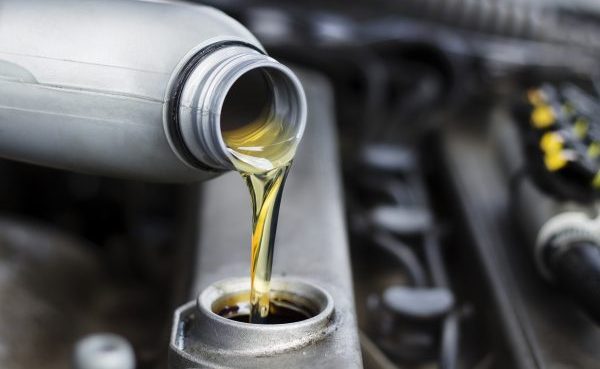
When it comes to caring for your vehicle, routine and regular scheduled maintenance are among the most vital necessities. In order to sustain the value and performance of your vehicle, consistent oil changes, tune ups, tire rotations, and other factory scheduled services are required.

Continue reading to learn the importance of oil changes and when you should get your vehicle’s oil changed.

Indianapolis Towing and Roadside Assistance

Indianapolis Towing and Roadside Assistance 317-247-8484

The Importance of Oil Changes

Cars, trucks, and other vehicles have different requirements when it comes to oil changes. Depending on the make or model of the vehicle, oil change frequencies will differ. Typically, we measure the length of time between scheduled auto services in distances. For example, most manufacturers suggest cars should have their oil changed every 3000 to 5000 miles, depending on the make and model.

Size and vehicle type also influence the rate of which a person should have their oil changed. For instance, diesel engines will have a contrasting oil change schedule compared to a gasoline fuel engine. Larger engines and vehicles burn more fuel, which may require them to have the oil changed more often. Small gasoline-fueled engines get better fuel mileage, resulting in less frequent routine maintenance.

Refer to the Owners’ Manual

The best way to accurately determine how often you need to change your vehicle’s oil is to refer to the owners’ manual for manufacturer recommendations. If you can’t find your owner’s manual, you can download a version for your make and model vehicle, online. You can also consult with a professional auto repair technician for professional advice.

Maintaining a Safe and Functional Vehicle

Nonetheless, understanding the importance of oil changes, and staying on top of factory maintenance, are vital factors to preserving the integrity and safety of your vehicle. Without routine oil changes, you could find yourself stranded on the side of the road with an overheating engine!

24 Hour Towing and Roadside Assistance in Indy

Zore's Inc. 317-247-8484

Zore’s Inc. 317-247-8484

Call Zore’s Inc. at 317-247-8484 for 24 hour tow truck roadside assistance in Indianapolis, Indiana. We are a family owned and operated company with more than 75 years in business here in Indiana! We offer a wide range of services for Hoosiers, including roadside assistance, scrap metal recycling, cash for junk cars, towing and recovery, storm damage, traffic clearance, and much more. Call 317-247-8484 to request a free estimate, anytime.

Helpful Advice for Long-Distance Driving

If you are planning a road trip of some kind in the near future, you could use a quick review of some long-distance driving tips. Regardless of age or driving experience, these tips will give you the knowledge necessary to transport yourself, your passengers, and your cargo, safely and efficiently.

Indianapolis Long Distance Towing 317-247-8484

Indianapolis Long Distance Towing 317-247-8484

Whether you are moving to a new state, traveling for work, or going on vacation, long-distance driving is something you might have to do once or twice in your life. And when the occasion arises, it is important that both you and your vehicle are fully prepared to travel hundreds or thousands of miles. Below are some vital long-distance driving advice that you can use and then pass along to friends and loved ones!

Vehicle Maintenance

The first thing you need to check before heading out on the road is the condition of your vehicle. It is important that your car or truck can actually make it to your destination, safely. Take your vehicle into your local auto repair shop for a routine service inspection. They will inspect your vehicle and provide all the necessary services to get it in optimal driving mode, such as bulb changes, fluid changes and refills, tire rotation and balancing, brake pad and rotor replacement, engine tune-up, and more. Once you know your car is in a safe and operational condition to drive a long distance, you can focus on the other preparations you must make for your upcoming trip.

Roadside Emergency Kit

It is always a good idea to have an emergency roadside kit in your vehicle at all times. Before you leave for your road trip, be sure your kit is fully-loaded and ready to go. If you do not have a roadside emergency car kit, it is strongly encouraged to purchase one at a local home improvement or automotive parts store. You can also purchase them online. For long-distances, it is recommended to choose a deluxe or extended kit that contains several pieces of emergency equipment, such as jumper cables, car jack, blanket, water bottles, flashlight, first aid kit, medication (OTC pain medicine, allergy medicine, etc.), batteries, small tools, triangle reflectors, road flares, and more.

Route Planning

Another important part of preparing for a long-distance road trip is to plan your route ahead of time. Not only does this avoid getting lost and experiencing unexpected dilemmas, it will save you loads of time and money. Plan out your entire course on a map, and add in stops for snacks, meals, restroom breaks, hotels, and more. With all of these planned out, you will always know where you are headed and what to expect when you get there. It can also save you money on fuel since you won’t waste time driving around looking for places to stop for food or bathrooms.

Part of planning out your journey should include provisions; so fill up the gas tank all the way, stock some coolers with snacks and beverages, and create a cozy interior with blankets, pillows, tablets, headphones, and anything else that will make the ride more comfortable for everyone.

Long-Distance Towing and Roadside Assistance

Zore's Inc. 317-247-8484

Zore’s Inc. 317-247-8484

Call Zore’s Inc. at 317-247-8484 for affordable long distance towing and roadside assistance services in you can trust. Our licensed and insured wrecker operators provide punctual and prompt tow truck services throughout all of Central Indiana, 24 hours a day and 7 days a week! We also provide a wide range of municipal services, roadside wrecker and recovery services, and much more. Request a free estimate, anytime.

Does Your Car Overheat on Road Trips?

If your car is prone to overheating on long trips, don’t let that hold you back any longer! Learn what options you have for taking road trips with an unpredictable car engine.

Roadside Assistance Service

Roadside Assistance Tow Truck 317-247-8484


There are many reasons why a car engine might overheat. Sometimes the coolant or motor oil runs out, while other times it’s more serious, like a radiator malfunction or broken cap seal. Regardless of why an engine overheats, the chief priorities are identifying the cause and finding a solution.

Fortunately, many overheating car engines are simply a result of minor issues, such as lack of fluids (i.e. coolant, motor oil, etc.). If this is the underlying cause of your overheating car engine, your best course of action would be to first load your trunk up with extra bottles of motor oil and radiator fluid (coolant).

Second, you need to start a routine car maintenance schedule to keep your vehicle operating safely and efficiently. Allowing your car to overheat frequently is not good for the engine. And last, you need to have a sufficient and modern-day roadside emergency kit in your vehicle at all times. This can help you in a wide range of vehicular emergencies.

If Your Car Engine Begins to Overheat…

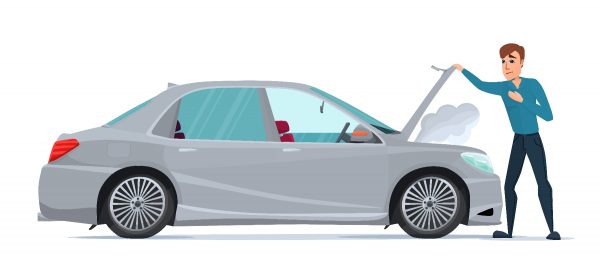
If your car engine begins to overheat, you need to immediately find a safe place to pull over. If you are on the interstate or highway, be sure to pull all the way over on the shoulder, and do not exit your vehicle on the traffic side. From there, you can try a few things to get your car to stop overheating. If it is not a simply fix, like refilling coolant, you need to contact a local Indianapolis towing company for 24 hour roadside assistance and tow truck service.

Here’s what you can try before calling a local tow truck:

Turn on all the heaters. This will extract the excess heat out of the engine. If this doesn’t work, you need to try other options to effectively cool off your vehicle if you want to have it driven to the nearest service shop.

Check your coolant levels. Safely exit the vehicle and check if you are out of coolant. If you are, refill with more radiator fluid. If you do not have radiator fluid, try adding one cup of water to your antifreeze.

Check the hose to the antifreeze. You should only remove the hose to the antifreeze if you know where it is under the hood. If you do, you can remove it and check it for blockages. Blow into the hose to loosen or eliminate any obstructions.

Roadside Assistance and Tow Truck Service Near You

Zore's Inc. 317-247-8484

Zore’s Inc. 317-247-8484

If nothing works, you need to have your vehicle towed to your choice of automotive service shop. Choose Zore’s Inc. for prompt and professional, 24 hour tow truck and roadside assistance. We operate 24 hours a day, 7 days a week, and 365 days a year, and we serve all of Indianapolis and Central Indiana. Call 317-247-8484 to request a free estimate or information about our services, today.

Information About Car Airbag Systems

The airbag system in a car or truck is easily one of the most vital vehicular components for driver and passenger safety. Getting to know these systems and how they work is highly beneficial and can even save lives. Because airbags work in a matter of milliseconds, they are complex and complicated systems to understand, none-the-less, to repair. Start off by learning what airbags are made of and what their intended manufactured purpose is, as well as, faulty airbags, recycled airbags, and more. Continue reading for information about these topics and more.

We Buy Airbag Deployed Junk Cars! 317-247-8484

We Buy Airbag Deployed Junk Cars! 317-247-8484

Airbags

Airbags are made from stretchable and flexible fabric or fibers that are durable and strong. They are compactly packaged and strategically positioned throughout a vehicle to provide immediate protection against a sudden impact or collision. Depending on the make, model, and year of a vehicle, it may have airbags in the front dashboards, passenger dashes, interior siding, head rests, and more. Typically, the newer the vehicle, the more airbags it’s likely to have.

When a vehicle’s crash sensors detect an impact, the airbag system is alerted within milliseconds to deploy. Airbag deployment is intended to prevent head injuries, ejection from vehicles, orthopedic injuries, and death. It is important to know that an airbag system is designed to work in conjunction with a vehicle’s seatbelt. If a driver or passenger are not wearing seat belts at the time of deployment, the airbags might not be able to deliver the security they are capable of and intended to do.

Crash sensors are tiny electronics that are embedded all throughout a vehicle. Without properly functioning crash sensors, an airbag system is rendered useless. They are designed to detect impacts, sudden braking, collisions, and similar vehicular damages. These sensors measure everything from wheel speed to the number of passengers in a vehicle. They can also relay messages to the airbag system’s control unit to activate automatic features like door and seat belt lock.

Do You Have a Total Loss Vehicle?

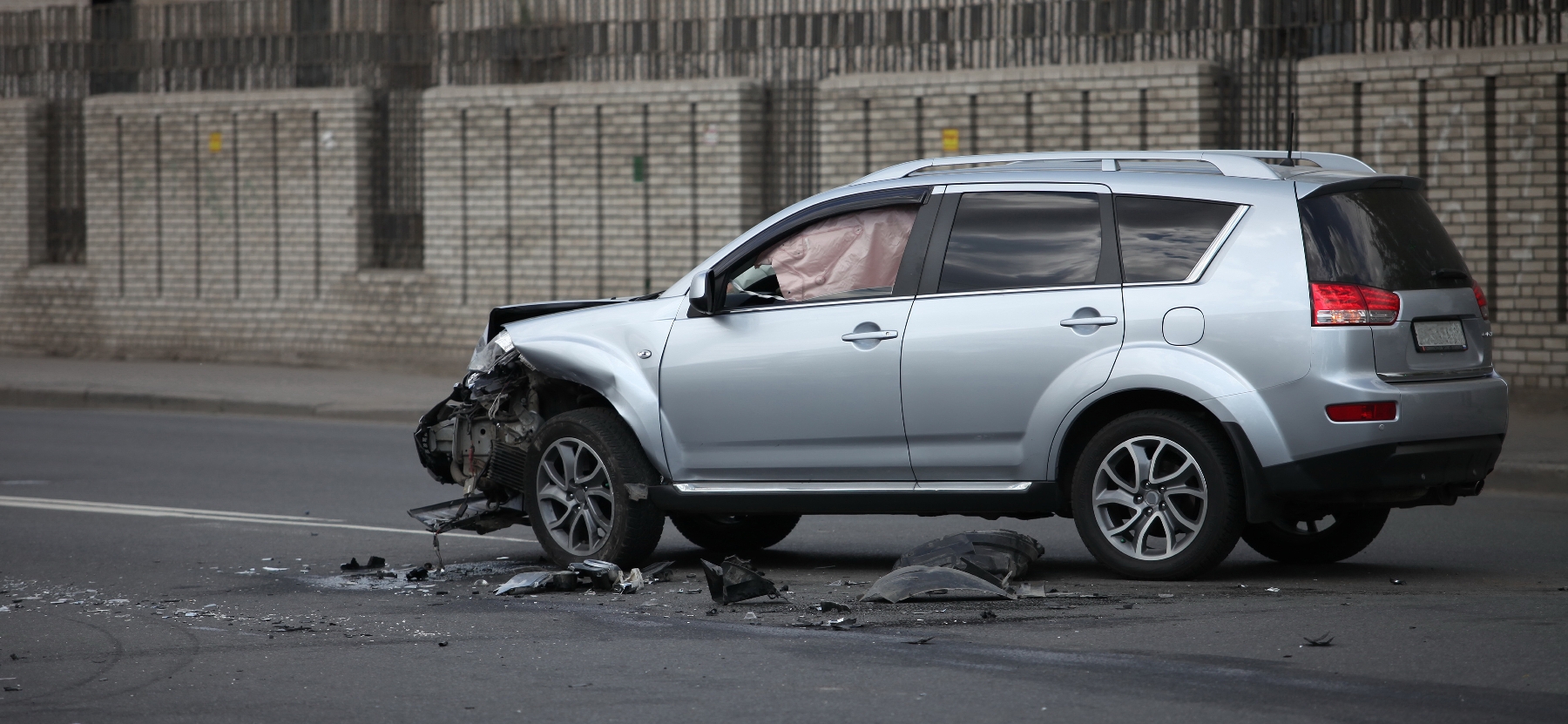
When an airbag deploys, most vehicles are considered a total loss. You can choose to file an insurance claim, or you can sell it yourself. If you are someone you love experienced an accident that involves airbag deployment, trust Zore’s Inc. for fast and professional accident clearance services. We will tow your totaled vehicle to any location of your choice within Central Indiana, and for an affordable price.

Towing and Recovery

Zore’s Inc. 317-247-8484

If you do not wish to file an insurance claim for your vehicle, sell it to us for cash instead. We buy all make and model vehicles, regardless of condition. And we pay the highest imbursements for junk cars in Indianapolis. Call 317-247-8484 to learn more about our towing and recovery services, junk car buyers, and more. Request a free estimate, anytime.

What to Do If Your Car Overheats

Never drive a car with an overheating engine. This is very dangerous for a number of reasons. Not only can it cause harm to you, your passengers, and other drivers, it can cause a significant amount of damage to your engine. This ultimately leads to costly engine repairs, and in worse cases, engine replacement. As a responsible driver, it is wise for you to learn how to manage an overheating car engine safely and efficiently. Not only can this save you time and money, it can protect you from getting injured or further damaging your car.

Indianapolis Towing 317-247-8484

Indianapolis Towing 317-247-8484


Any time a car or truck demonstrates signs of struggle, an inspection should be administered right away. In most cases, if you can spot a problem early on, it will be less costly and time consuming to repair. If you let a car problem linger, not only will the degree of damage increase with every drive, the amount of time and money it’ll take to repair it will too. If the issue is in the engine, waiting too long to repair it can result in total loss of the vehicle. In this case, your only option would be to sell it to an Indianapolis junk car buyer.

Dealing With an Overheated Car Engine

Several signs indicate that an engine is overheating. If there is steam coming from the hood of your car, the temperature gauge is in the red, you smell gasoline, or hear clunking sounds coming from your engine, your car is likely overheating. If your car begins to show any of these signs, it is too dangerous to drive it any further. Instead, you will need to have your vehicle towed to the nearest auto shop or to back to your home.

Here’s What To Do When Your Car Overheats:

➊ Pull Over Immediately
➋ Place Vehicle in Park
➌ Turn Off Engine
➍ Remove Keys from Ignition and Place in Pocket
➎ Call a Mechanic or AAA Service
➏ Walk Off a Busy Road
➐ Find a Safe Location to Wait for Help

Be sure to walk away from the road where your car is parked so that you do not risk getting hit by another vehicle. Find a safe location to wait, and call for help. You can call a friend or family member to come pick you up, however, you will still need to make arrangements for your vehicle. Simply contact a local towing company for prompt and professional tow truck service. They can respond within minutes, and safely deliver your vehicle to your location of choice. By choosing a well-established and reputable Indianapolis towing company, you can ensure you get a great price and courteous customer service.

In fact, CALL ZORE’S INC. when you need fast and professional towing and roadside assistance service in Indianapolis, Indiana!

Towing and Recovery

Zore’s Inc. 317-247-8484

Call Zore’s Inc. at 317-247-8484 anytime for towing, recovery, and roadside assistance you can trust. We operate 24 hours a day and 7days a week, and serve all of Central Indiana. Our certified tow truck operators retain the latest technologies to safely tow and assist all make and model vehicles. We also tow vans, trucks, motorcycles, campers, RV’s, and more! Call 317-247-8484 to request a free estimate, today.

What To Do If Your Car is Stuck in a Ditch

Getting stuck in a ditch is never part of plan. So when it happens, it is normal to feel a sense of panic and frustration. During times like this, it is important to keep a level head so that you can use your best judgement in terms of safety and practicality. There are potential risks involved when dealing with a car that has veered off the road, so safety is key. By learning what you should do in these situations, you can get yourself back on the road faster, while also protecting yourself and your passengers in tow. Continue reading to do just that.

24 Towing Indianapolis Indiana

24 Towing 317-247-8484

Getting Your Car Out of a Ditch

The most common cause for getting stuck in a ditch while driving is veering or skidding off the road. Human error, distracted driving, intoxicated driving, defensive driving, and inclement weather like rain and snow are the usual reasons for losing control or skidding off the road. When factors like intoxication or inclement weather are at play, it is important to take serious precautions after your vehicle has settled into a ditch. If you are in inclement weather, contact an emergency roadside assistance service right away. If you or the driver you are with is intoxicated, it is vital that you do not get back into the car and drive. It is also vital that you do not attempt to pull your vehicle out of the ditch. Instead, call a sober friend or family member and have them take it from there.

For all other cases of a ditched vehicle, here are the steps you should follow:

⛍ Ensure Your Safety

The very first thing you should do after the car has fallen into a ditch is check everyone’s condition. Make sure no one is injured, and then take the necessary precautions to further ensure everyone’s safety. Start by assessing your situation and putting on your hazard lights. This will notify other drivers to steer clear, thus reducing the chances of another accident. It is also a good idea to put your parking brake on since you do not know how stable the ground is below your vehicle. This is especially true in loose soils, wet muds, and snow. If you are too close to the road, it in a dangerous or obtrusive position, it is wise to contact emergency services or law enforcement for help redirecting or managing traffic.

⛍ Adjust Your Vehicle’s Weight

If you are in a somewhat flat ditch and there has been no damage to your car, you may be able to dive it right out. Before attempting to do this, assess your location and be sure to protect yourself from oncoming traffic. Also remember to undo the parking brake. If the vehicle seems to almost make it out, but can’t quite get there, you can try altering the weight load in the vehicle. A lighter vehicle is easier to maneuver. Remove anything of significant weight value, and try again. After a few tries, if you still are not successful, move onto another possible solution.

⛍ Gain Traction

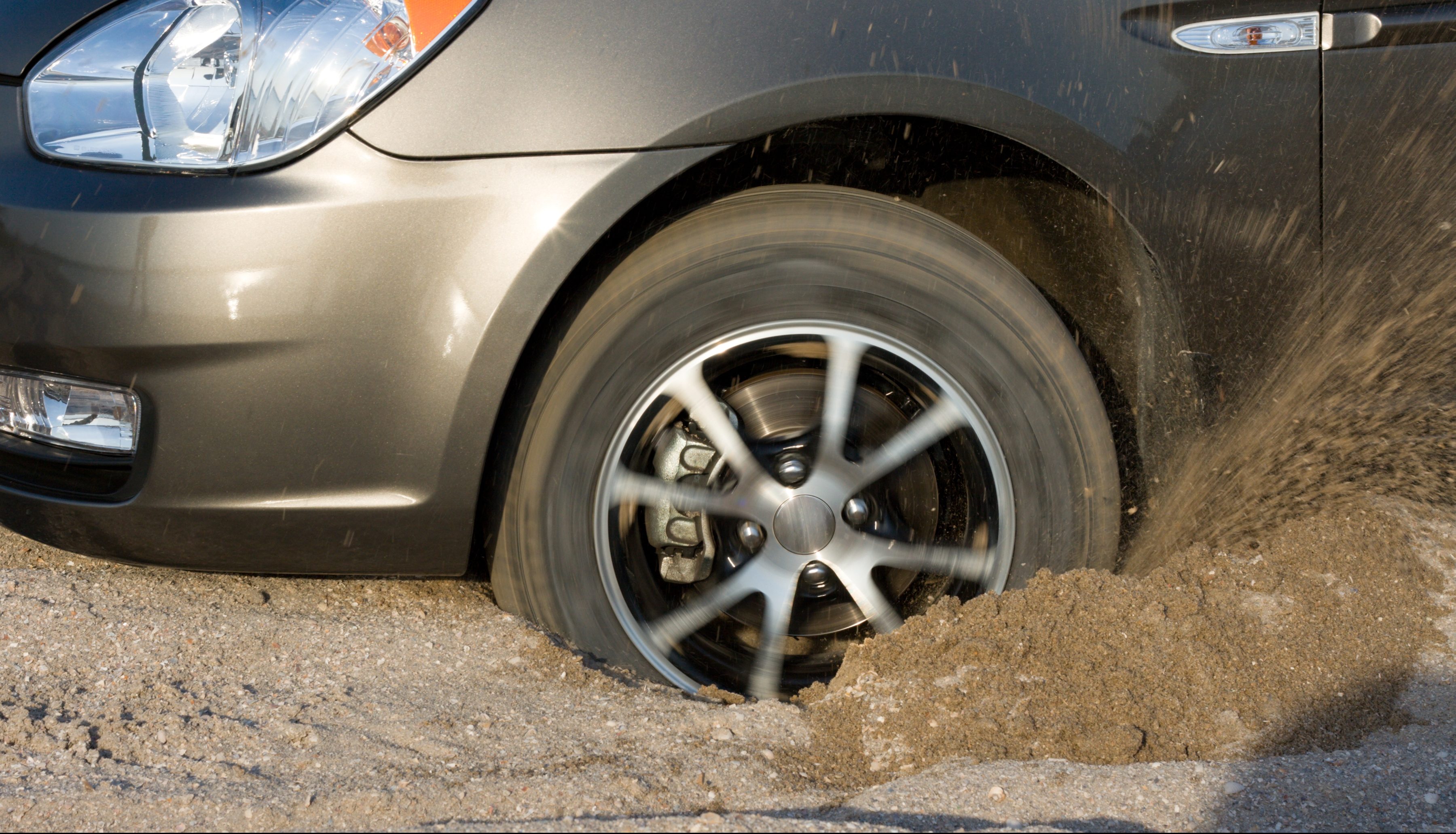
If your car is stuck in snow or mud, the “lighter is better” theory does not apply. Instead, you want weight inside your vehicle to gain more traction. Regardless of what your car is stuck in, gaining traction can help give it the force it needs to get out of the ditch. You can do this by pouring sand or kitty litter around your tires, but it is unlikely that you have any on hand. If there is a convenient store or gas station within walking distance, you can go buy some.

If you do not have access to these items, there are effective alternatives that you likely do have on hand, including a flattened cardboard box and your car’s floor mats. If your car is rear wheel drive, place the items behind the rear tires. For front wheel drive vehicles, place them in front of the tires.

⛍ Call for Professional Help

If your first few attempts are unsuccessful, there is no need to continue trying. Not only can this put stress on your vehicle and potentially cause damage, it can jeopardize your safety. At this point, it is strongly encouraged to contact a 24 hour towing company for safe and secure assistance. They have the proper rigs and wenches to pull any vehicle out of a ditch, safely and unharmed. They can get you back on the road faster, and at an affordable cost. If your vehicle is too damaged to drive, they can tow it directly to your auto shop of choice.

24 hour towing in Indianapolis

Towing and Recovery

Zore’s Inc. 317-247-8484

Call Zore’s Inc. at 317-247-8484 for professional 24 hour towing in Indianapolis, Indiana. We are highly-trained and licensed tow truck operators that can pull any motor vehicle out of a ditch safely, including trucks, vans, semi’s, RV’s, motorcycles, motorbikes, ATV’s, and more. Call 317-247-8484 to request a free estimate for Indianapolis tow truck service, anytime.

5 Methods for Improved Car Security

When it comes to improving the security of your vehicle, the best way to determine your needs is to assess the surrounding risk and set a budget. Once you have these two aspects figured out, you can then begin your search for a suitable car security plan that keeps your vehicle protected when you are not around. Continue reading to learn about 5 common vehicular security systems that are both economical and effective.

Indianapolis Towing 317-247-8484

Indianapolis Towing 317-247-8484

Car Alarm

A car alarm is the most basic source of security. Many newer models come standard with factory car alarms, while older cars can be easily fitted with one of many available devices on the market. Car alarms vary in brand, features, innovation, and price. You can choose one that fits your budget and provides sufficient security.

Mechanical Car Immobilizer

Mechanical car immobilizers have been around for decades. The most common vehicular immobilizer is “The Club”, which is a device that you manually attach to your steering wheel when you are away, thus preventing thieves from being able to move the wheel and drive away. Other car immobilizers include devices such as hood locks, tire locks, gearshift locks, and pedal locks. All of these would make it very difficult for a thief to take off in your car.

Electronic Car Immobilizer

In contrast to mechanical immobilizers, there are also several different types of electronic immobilizers available. These devices are designed in key pad or punch pad form, or as a chip that needs to be pushed into place before you can start your car. They are very difficult for thieves to evade, making them terrific options for car security.

Kill Switch

Kill switches are custom installed in a place that only you would know, so thieves cannot find them. When in the OFF position, it makes it impossible to start your car. They are relatively inexpensive, but must be installed by a professional automotive specialist.

VIN Etching

Vehicle identification number etching is another method of car security that is easy to do and very inexpensive. The most common reason why car thieves steal cars is to dismantle them and sell them for parts. By visibly branding your car’s unique VIN on all the important parts, you thwart thieves from wanting to steal your vehicle since it would be near impossible to turn a profit. You can buy VIN etching kits for as low as $20 at any local automotive parts store.

Call Zore’s Inc. for 24 Hour Towing and Recovery in Indiana

Towing and Recovery

Zore’s Inc. 317-247-8484

Zore’s Inc. will assist you in protecting your vehicle by towing it to your home or auto shop anytime you break down! Call 317-247-8484 to request towing, roadside assistance, and recovery 24 hours a day and 7 days a week. Our operators are licensed and insured, and our prices remain affordable for everyone. Call 317-247-8484 to request a free estimate for service, today.

Know Your Boat Trailer Laws

Indianapolis Towing 317-247-8484

Indianapolis Towing 317-247-8484

There’s a law for almost everything, and boat trailers are no different. Now that spring is here, everyone is jumping at the opportunity to pull their boats out of storage and get them all set up at dock. Whether you have a fishing boat, speed boat, or pontoon, it is important that you are familiar with your state’s towing laws regarding boat trailers. And if you are planning to take a road trip out of state with your boat trailer, it is wise to learn their particular trailer laws as well.

You wouldn’t want to risk endangering yourself and others on the road, nor would you want to be cited for a towing infraction! Continue reading to learn the basic boat towing trailer laws in Indiana and its adjacent states.

Trailer Laws for Boats

There are three aspects to consider when it comes to boat trailer laws: 1) width, 2) brakes, and 3) weight. The laws surrounding these aspects vary among states, so it is best to review the particular state trailer laws for any borders you might cross on your trip.

⚓ Trailer Width

In virtually every state, there are no laws requiring drivers to have a wide-load permit if the trailer width is under 102 inches (8 feet 6 inches), including any guideposts. However, there are a few states that do require such permits even if the width is within these limits. For instance, New York, New Jersey, and Hawaii restrict this limit to 96 inches, or 8 feet. While North Carolina only requires a wide-load permit for trailers exceeding 120 inches (10 feet) wide. Even if you are only traveling through one state that requires wide-load permits, you will need to acquire the permit to remain legal at all times on your trip.

⚓ Trailer Brakes

There are only 7 states that do not require trailer brakes when towing a boat. These include Kentucky, Oregon, Missouri, Kansas, Massachusetts, North Dakota, and Wyoming. Although these states do not require a braking system connected to your boat trailer, they do have restrictions. For instance, in Kansas, your vehicle and trailer must be able to come to a complete stop within 40 feet while driving at 20 miles per hour. If it cannot, then you would need to install a braking system. Similarly, in Oregon, if your trailer is carrying more than 8 tons, it would need to be able to come to a complete stop at 20 miles per hour, within 35 feet.

⚓ Trailer Weight

If a trailer weight exceeds a certain weight, state laws will require your trailer to have brakes. Although the weight limits vary among states, the average weight limit is 3,000 pounds. Trailers carrying more than 3 tons are required to have a legitimate braking system, including lights, set up with their towing vehicle. States with limits lower than 3,000 pounds include Georgia (2500 pounds), Mississippi and Ohio (2000 pounds), and Idaho (1500 pounds).

Indianapolis Boat Towing

Towing and Recovery

Towing and Recovery 317-247-8484

Call Zore’s Inc. at 317-247-8484 for safe and professional towing and recovery in Indianapolis, Indiana. We have the proper training, experience, and resources to safely transport any size boat to anywhere in the country. For the best service and most affordable price, call Zore’s Inc. for all your Indianapolis boat towing needs.