How to Handle Abandoned Vehicles on Private Property

We’ve all seen them—those rusting, flat-tired eyesores that seem to sprout from the pavement like weeds. Whether it’s a tenant who moved out and left a sedan behind, or a stranger who decided your commercial parking lot was a long-term storage facility, discovering an abandoned vehicle on your private property is more than just an annoyance. It’s a liability.

While your instinct might be to call a tow truck immediately, Indiana has specific laws protecting vehicle owners that you must navigate first. Acting too rashly could land you in legal hot water. This guide breaks down the steps for legally removing unwanted vehicles from your Indiana property, ensuring you reclaim your space without inheriting a lawsuit.
Call 317-247-8484 For Private Property Towing in Indianapolis Indiana

Understanding Indiana’s Abandoned Vehicle Laws

Before you call a tow truck, you need to understand what legally constitutes an “abandoned vehicle.” In Indiana, this isn’t just a matter of opinion; it’s a matter of statutes.

According to Indiana Code (IC 9-13-2-1), a vehicle on private property is generally considered abandoned if it has remained there without the consent of the owner or person in control of the property for more than 48 hours.

However, for the specific purpose of removal, Indiana Code § 9-22-1-16 offers a slightly faster timeline for property owners. It states that if a vehicle believed to be abandoned on private property is not removed 24 hours after you’ve identified it, you (the property owner or manager) may have it towed.

The “Emergency Situation” Exception

There is a notable exception to the waiting period. If the vehicle creates an “emergency situation,” it can be removed immediately. The law defines an emergency as a situation where the vehicle:

  • Physically interferes with normal business operations.
  • Poses a threat to the safety or security of people or property.

Local Ordinances Matter

While state law provides a baseline, local municipalities often have their own enforcement procedures. For example, in Indianapolis and Marion County, the Department of Business & Neighborhood Services (DBNS) has a specific process involving a 72-hour notification tag before a vehicle is towed as a public nuisance. Always check your city or county ordinances to ensure you aren’t violating a stricter local rule.

Initial Steps: Identification and Documentation

Before taking action, you must build a record of the abandonment. If the vehicle owner later claims you towed their car illegally, your documentation will be your best defense.

  1. Time-Stamp Your Discovery: Note the exact date and time you first noticed the vehicle.
  2. Photographic Evidence: Take clear photos of the vehicle from multiple angles. Ensure you capture the license plate, the VIN (usually visible through the windshield on the driver’s side), and the vehicle’s position relative to your property lines.
  3. Check for Condition: Document factors that suggest abandonment, such as flat tires, broken windows, accumulated debris, or missing plates. These details help support your claim that the vehicle is truly abandoned and not just parked temporarily.

Owner Notification

If the vehicle belongs to a tenant or someone you know, a simple conversation or written request is the best first step. However, if the car is a mystery, your obligations shift.

While you are not strictly required to play private investigator, making a reasonable effort to notify the owner can protect you from liability. If the vehicle is in a residential complex, check your tenant registry against the license plate or parking permit number if applicable.

In many jurisdictions, law enforcement or authorized towing agencies handle the formal notification once the towing process begins. For instance, when a towing service takes possession of an abandoned vehicle, they are typically required to notify the owner and lienholder (via certified mail) within a specific timeframe to establish a mechanic’s lien for storage costs.

The Removal Process

Once the required time period (typically 24 hours under state statute) has passed, you can proceed with removal.

1. Contact a Reputable Towing Company

Do not attempt to tow or move the vehicle yourself. You must use a licensed towing company or salvage yard. When you call, clearly state that you are requesting a private property impound for an abandoned vehicle.

2. Complete Necessary Authorization

The towing company will likely require you to sign a towing authorization form or a “Request for Private Property Tow.” This document affirms that you are the property owner or authorized agent and that the vehicle has been on the property without consent for the statutory period.

3. Reporting to Law Enforcement

In many Indiana jurisdictions, the towing operator is required to report the impound to local law enforcement or the Bureau of Motor Vehicles (BMV) to ensure the vehicle isn’t listed as stolen. This reporting also kicks off the official “abandoned vehicle” paperwork trail, which is crucial if the vehicle goes unclaimed and needs to be sold or scrapped.

  • Note for Indianapolis Residents: If you are in Marion County, you may need to submit an affidavit to the DBNS to trigger an inspection and tagging process before a tow can occur, specifically for nuisance vehicles.

Request Private Property Towing Management in Indy

Prevention Tips

Dealing with abandoned vehicles is a headache best avoided. Here are a few ways to deter unauthorized parking on your property:

  • Clear Signage: Post visible signs at all entrances stating “Private Property: Unauthorized Vehicles Will Be Towed at Owner’s Expense.” Cite the towing company’s name and phone number on the sign.
  • Lighting and Security: Abandoned vehicles are often dumped in dark, unmonitored corners. ample lighting and visible security cameras can deter dumping.
  • Tenant Leases: If you manage a rental property, include a clear clause in your lease regarding inoperable or unregistered vehicles. Require all tenant vehicles to be registered with your office.

Conclusion

Handling abandoned vehicles requires a careful balance of patience and swift action. One misstep can lead to disputes or liability issues. Whether you manage a sprawling commercial complex or a multi-family residential unit, knowing the ins and outs of Indiana property law is essential for keeping your lot clear and compliant.

If you are dealing with persistent parking issues or need comprehensive support managing your real estate assets, professional help is available.

Need assistance with property management or towing coordination in Central Indiana? Contact our team today to streamline your operations and keep your property compliant.

Call Now for Service

Related Post: Property Management Towing in Indianapolis: A Complete Guide
Understanding the Different Types of Tow Trucks and Their Uses

For drivers, fleet managers, and car enthusiasts, understanding the myriad types of tow trucks can be the difference between efficient recovery and unnecessary damage to your vehicle. Tow trucks come in various forms, bristling with a selection of tools and systems designed to address specific scenarios encountered on the road. In our in-depth exploration, we’ll not only cover the major categories of tow trucks but also reveal the intricacies of specialized vehicles to provide a comprehensive understanding of this integral service within the automotive industry.

Call 317-247-8484 For 24 HR Tow Truck Services in Indianapolis Indiana

The Importance of Tow Truck Variety

Before we plunge into the different types of tow trucks, it’s critical to underscore the value of understanding their varied uses. When you’re stuck on the side of the road, you need the right type of tow truck dispatched to your location.

To highlight this point, consider two hypothetical scenarios – one involving a standard sedan stuck in a ditch on a back road and another involving a loaded semi-truck overturned on a freeway. The tow trucks required for each crisis are vastly different, and the service providers’ expertise in accessing and handling these situations is equally critical.

Knowing the array of towing trucks at your disposal not only educates you on what to expect during a recovery operation but also ensures that you can communicate effectively with towing operators, choosing the right one for your specific situation.

Primary Types of Towing Trucks

There are four main types of towing trucks, each suited for different vehicle sizes and recovery scenarios.

Flatbed Tow Trucks

The workhorse of the tow truck family – the flatbed tow truck, or rollback tow truck, is popular for general towing and recovery. With a hydraulic system that allows the entire bed to stand flat on the ground, vehicles can be driven or winched onto these platforms with ease, eliminating the need to hoist or pull them.

Flatbed tow trucks maximize safety and minimize the risk of damage to your vehicle, making them a common choice for luxury, sport, and vintage cars. Transporting we can’t trust a vehicle to use its own power works too.

Hook and Chain Tow Trucks

Once a common sight on the highways, hook and chain trucks are used to haul all types of vehicles, from cars to small trucks. However, they have fallen out of favor in recent times due to the potential for damage caused by the chains, which can scrape or dent vehicles, particularly those made of aluminum or composite materials. These trucks are still useful for short-distance tows of vehicles that have been extensively damaged and cannot be safely lifted by other means.

Wheel-Lift Tow Trucks

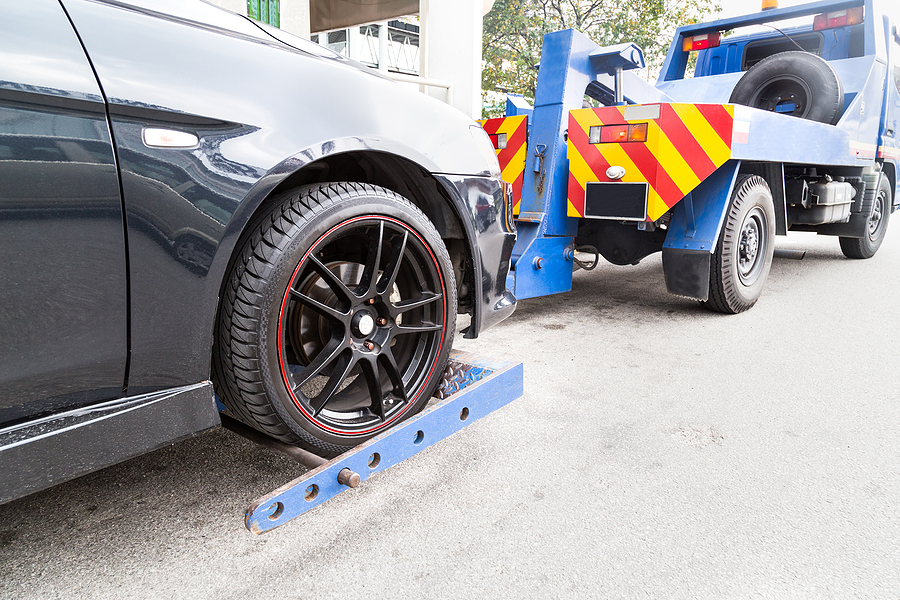
Similar in concept to hook and chain trucks, wheel-lift trucks use a much safer and more modern method to secure the vehicle – a metal yoke that fits beneath the front or rear wheels and lifts them off the ground. This minimizes potential damage while still providing an easy way to transport vehicles without all four wheels. Since they don’t require passing a chain or winching systems over the vehicle, wheel-lift tow trucks are often used for impounding and repossessions, thanks to their secure yet gentle grip on the wheels.

Integrated Tow Trucks

Integrated trucks, also known as self-loaders, combine the functions of a flatbed truck and a wheel-lift truck into one. Their hydraulic systems provide versatility in how vehicles are towed, allowing for quick adjustments according to the recovery operation’s needs. These trucks are especially popular for transporting vehicles that may have sustained damage, as they can be maneuvered with precision to load and unload the cargo without additional equipment’s intervention.

Types of Specialized Tow Trucks

Beyond the common types of tow trucks, there is a spectrum of specialized vehicles designed for exceptional conditions and heavyweight recovery operations.

Heavy-Duty Tow Trucks

Engineered to deal with the most extensive recovery scenarios, heavy-duty tow trucks can handle large vehicles such as buses, RVs, and big rigs. They are equipped with feature-laden tow bars and winches capable of managing immense weights and are often called upon to clear accident sites on major highways. Their sheer size and lifting power make them a crucial asset in the event of catastrophe or vehicle malfunctions, frequently employed by public safety departments and commercial recovery services.

Off-Road Recovery Trucks

For vehicles stranded in rugged terrains, off-road recovery trucks combine the power of off-road vehicles with the capabilities of a tow truck. Equipped with long winch cables, sturdy axles, and often powered by four-wheel drives, they can access and retrieve vehicles stuck in mud, snow, or even fallen under steep cliffs. Such trucks are essential for environments where standard tow trucks are impractical, and the priority is on getting the vehicle back on the road quickly and safely.

Boom Trucks

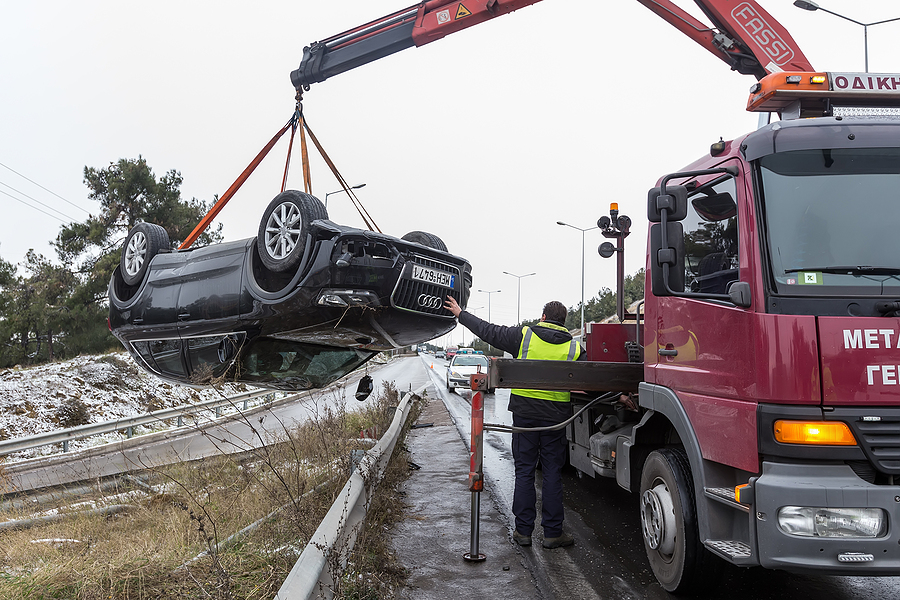
Boom trucks feature an extendable arm with a winch to recover vehicles in difficult positions or from unusual circumstances, such as when a vehicle is underneath a bridge or within a multi-story parking structure. They can also assist in automotive repairs by providing a safe, elevated platform for mechanics to work on a vehicle. These specialized tow trucks are indispensable for roadside assistance companies and garages dealing with situations that require a vertical lifting solution.

Selecting the Right Towing and Recovery Service

Choosing a tow truck service can be daunting due to the myriad options and the high stakes involved in vehicle recovery. There are certain factors to consider that may ensure you’re in good hands.

Vehicle Size and Weight

The most crucial factor in selecting a tow truck service is matching the vehicle’s size, weight, and unique features to the appropriate type of tow truck. A mismatch here can lead to complications during the recovery process, including damage to the vehicle or unsafe towing conditions.

Towing Distance

The distance your vehicle needs to be towed will also influence the type of tow truck required. Long-distance tows may call for flatbed or heavy-duty tow trucks to ensure the safety and security of the vehicle while in transit.

Required Services

If you need more than a simple tow, such as roadside assistance or vehicle recovery from a harrowing position, you would require a towing service with a range of specialized vehicles and the expertise to deploy them effectively.

Conclusion

Understanding the intricacies of towing and the types of tow trucks available empowers drivers and fleet managers to make informed decisions and know what to expect in the event of a vehicle recovery. Regardless of the situation, from off-road emergencies to fleet maintenance, knowing the right type of tow truck for the job is vital.

For more in-depth information on tow truck services and to explore how local providers can meet your specific recovery needs, get in touch with a trusted towing and recovery company in your area. Don’t hesitate to familiarize yourself with the range of services they offer and the type of equipment in their fleet. After all, being prepared for the road ahead is the best way to ensure safe and efficient recovery.

Are you in need of a tow truck near Indy? Contact us at 317-247-8484 for 24 hour towing and recovery services in Indianapolis, Indiana. We serve all of Central Indiana in more than 30 surrounding counties.

Related Posts:

The Insider’s Guide to Avoiding Tow Truck Scams
Car Noises That Suggest You Need to Pull Over and Call a Tow Truck
How to Get Pulled Out of a Ditch in Indianapolis

How to Get Pulled Out of a Ditch in Indianapolis

The snow is still being managed by the city, so there are plenty of drivers still sliding off into ditches. If you are one of these unlucky drivers stuck in a snowbank, you need to get pulled out, ASAP. Continue below to learn how to get pulled out of a ditch or anywhere you might be stuck in snow, and all before dinner hits the table this evening.

24 Hour Emergency Towing and Roadside Assistance in Indianapolis, Indiana 317-247-8484

Stuck in Snow in Indianapolis? Need a Tow?

Zore’s Inc. Towing and Recovery fleets can help get you out FAST! We tow any vehicle, in any condition, anytime, and anywhere! Our tow truck operators are standing by 24 hours a day, 7 days a week, and 365 days a year, and snow can’t hold us back! Need to get pulled out or towed? Here’s how:

Step 1 – Contact us at 317-247-8484

Step 2 – Tell us your location and vehicle information.

Step 3 – Remain inside your vehicle unless you are sure you are safe from oncoming traffic or inclement weather conditions.

Step 4 – Allow our wrecker operator to set up our rig and watch in amazement at how fast and careful we are with your vehicle!

We accept all forms of payment, including credit cards, debit cards, cash, check, and in some cases, electronic payment.

Zore’s Inc. Has Your Back on the Road, Day or Night, Snow or Ice!

Zore’s Inc. has over 35 tow trucks and wrecker equipment in their private fleet! This includes the one crane truck, 14 flatbed tow trucks, 5 heavy duty wreckers, bulldozers, forklifts, portable car crusher, and 16 other assorted types of tow trucks! This makes us one of the largest towing and recovery operations in the state!

Indianapolis Indiana Towing and Recovery 24 Hours a Day

Contact us toll-free at 1-800-523-7304 from anywhere in Indianapolis or Central Indiana when you need emergency towing and recovery service. We serve over 30 counties, so you can rest assure that we’ll get to your location faster than anyone else around. Ensuring the complete safety, convenience, and satisfaction for our Hoosier communities is our primary objective, and we continue to work around the clock to provide the highest standards of excellence in terms of professionalism, service, and support for all clients. Request a free estimate for tow truck or roadside assistance in Indianapolis, IN.

Zore's Inc. 317-247-8484
Zore’s Inc. 317-247-8484